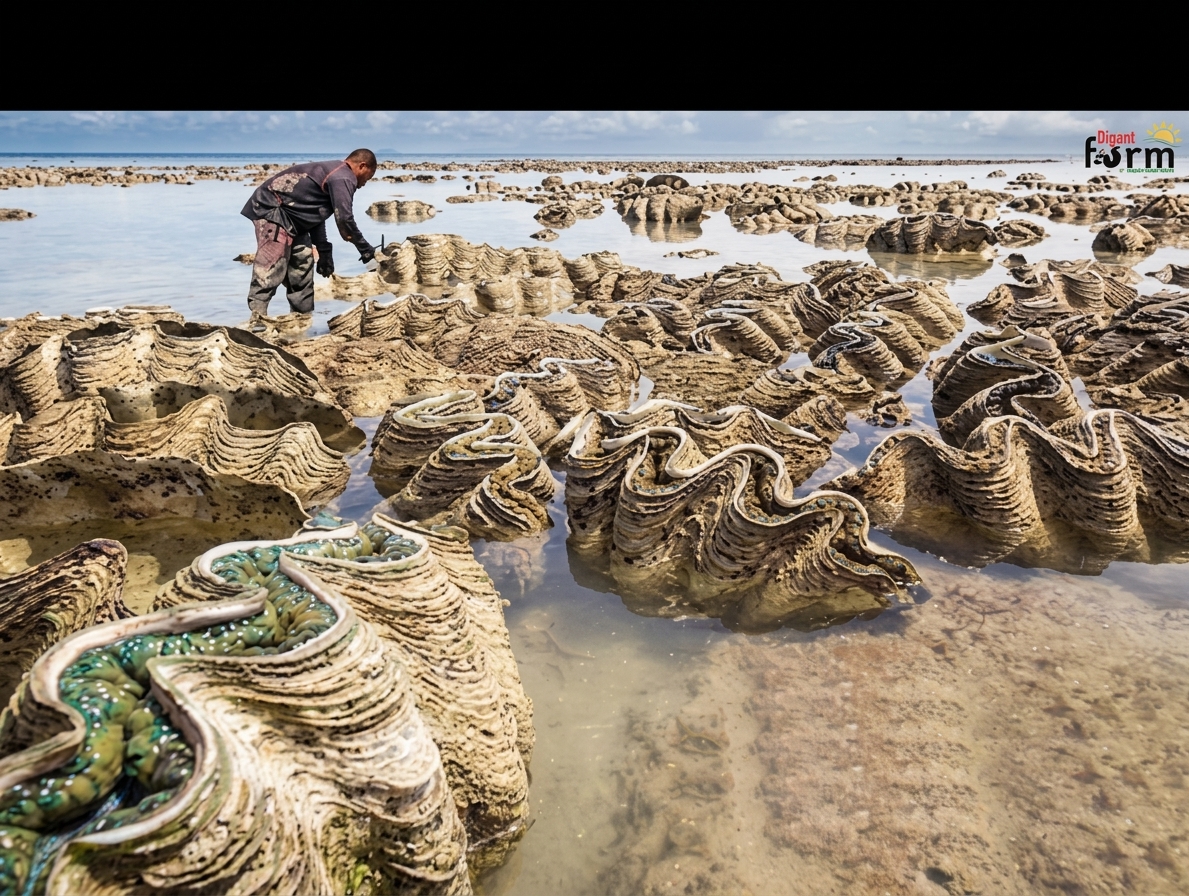
T. gigas Clam: Size, Habitat, Facts & Conservation Guide
T. gigas clam A giant clam that once thrived across tropical Indo-Pacific reefs now faces serious pressure from harvesting, habitat damage, and environmental change. That makes understanding this remarkable animal more important than ever. The T. gigas clam, scientifically named Tridacna gigas, is the largest species of giant clam and one of the most impressive bivalves on Earth. It combines an enormous shell with a colorful mantle and an unusual partnership with microscopic algae.
T. gigas Clam Quick Facts
| Feature | Details |
|---|---|
| Scientific name | Tridacna gigas |
| Common name | True giant clam |
| Animal group | Mollusca |
| Class | Bivalvia |
| Family | Cardiidae |
| Genus | Tridacna |
| Maximum reported size | More than 1 meter wide |
| Maximum reported weight | More than 225 kg (496 lb) |
| Typical habitat | Shallow tropical marine environments |
| Typical depth | About 6–65 feet |
| Main range | Indo-Pacific and Great Barrier Reef region |
| Diet | Photosynthetic symbionts plus filtered food |
| Reproduction | Sexual reproduction through broadcast spawning |
| Major threats | Overharvesting, habitat degradation and environmental stress |
| CITES status | Appendix II |
| U.S. conservation action | Proposed endangered listing |
NOAA Fisheries identifies Tridacna gigas as the largest of the giant clams, with individuals exceeding a meter in width and weighing more than 225 kilograms. The species also has a much wider ecological story than its size suggests because its survival depends partly on its relationship with photosynthetic algae.
How Large Can a T. gigas Clam Get?
The size of this species is its most famous feature. A mature T. gigas clam can exceed 1 meter in width and reach more than 225 kilograms, making it the largest living giant clam species. NOAA Fisheries lists a maximum length of about 51 inches for the species.
Its massive shell develops deep radial folds that create a powerful, ribbed appearance. The shell also protects the soft body inside while allowing the animal to remain firmly established on the seafloor.
Size also gives the species an important biological advantage. A large mantle provides considerable surface area for its photosynthetic partners, allowing the clam to capture sunlight and support its energy needs.
Where Does the T. gigas Clam Live?
The T. gigas clam inhabits warm tropical waters across the Indo-Pacific. Its documented range extends from Myanmar in the west toward Kiribati in the east, with records reaching from the Ryukyu Islands of Japan southward to Queensland, Australia.
It commonly occurs around coral reefs, reef flats, lagoons, islands, and suitable sandy or hard-bottom areas. NOAA reports that individuals are typically found in relatively shallow water, roughly 6 to 65 feet deep.
This shallow-water lifestyle is important because the clam depends heavily on sunlight. Its mantle houses microscopic photosynthetic organisms, so sufficient light supports the relationship that helps fuel its growth.
Preferred Habitat
The species can occur in several reef-associated settings, including:
- Coral reef communities
- Atoll lagoons
- Fringing reefs
- Hard reef substrates
- Coral rubble
- Sandy areas near reefs
- Shallow tropical coastal waters
The exact habitat can vary with local conditions. Clear, warm, well-lit water generally provides the conditions needed for successful photosynthesis and growth.
What Does It Look Like?
A T. gigas clam has a thick, heavy shell with strong radial ribs. Its enormous size separates it from most other bivalves, but its mantle can be equally striking.
The mantle is often yellowish-brown to olive-green and may display numerous bright blue-green markings or rings. These patterns can become especially visible around the mantle edges.
The mantle is not simply decorative tissue. It performs an important biological role because the clam’s photosynthetic symbionts live within specialized tissues associated with it.
Easy Identification Features
Look for:
- Very large body size
- Heavy, deeply folded shell
- Wide mantle opening
- Blue, green, brown, or mixed mantle patterns
- A shallow tropical reef habitat
These characteristics make the species easier to distinguish from smaller giant clams such as Tridacna maxima and Tridacna squamosa.
How Does It Feed?
Like other bivalves, the T. gigas clam can filter particles from seawater. Its gills help capture suspended microscopic food, including planktonic material.
However, filter feeding does not explain the enormous size of adult giant clams. Their success depends heavily on a second source of energy: photosynthesis performed by symbiotic algae living inside their tissues.
This creates an unusual feeding strategy. The clam provides a protected environment and access to sunlight, while its algal partners produce organic compounds through photosynthesis that can contribute substantially to the clam’s nutrition.
The Two-Part Feeding Strategy
The species therefore combines:
- Filter feeding: captures suspended food particles from seawater.
- Photosynthetic nutrition: receives organic products associated with its algal symbionts.
This partnership helps explain how an animal that cannot actively hunt can reach such extraordinary dimensions.
Why Are Its Algae Important?
The relationship between giant clams and photosynthetic algae is one of the most fascinating parts of their biology. Giant clams host members of the family Symbiodiniaceae within specialized internal structures associated with the mantle.
Sunlight reaches the mantle, allowing the algae to photosynthesize. The products of that process can then contribute organic carbon to the clam.
The relationship also explains why the species favors shallow, sunlit environments. Without adequate light, the photosynthetic side of this partnership becomes less effective.
Environmental stress can disrupt this relationship. Research summarized by the University of the Philippines Marine Science Institute found that bleaching in T. gigas was associated with reduced reproductive performance, showing that heat-related stress can affect more than appearance or survival.
How Does the T. gigas Clam Reproduce?
The species reproduces sexually through broadcast spawning. Adults release reproductive cells into the surrounding seawater, where fertilization occurs.
The resulting larvae spend an early part of their development in the water column before settling and transforming into juveniles. Adult giant clams remain attached or stationary rather than moving around the reef like fish or crustaceans.
Giant clams also have an unusual reproductive system. They function as simultaneous hermaphrodites, possessing male and female reproductive capabilities, but they avoid self-fertilization. This arrangement allows reproductive partners to exchange gametes while increasing opportunities for successful spawning.
Basic Life Cycle
The life cycle can be simplified into these stages:
Egg + sperm → fertilized egg → larva → settlement → juvenile → adult
The early stages are particularly vulnerable because larvae must survive in the water column before establishing themselves on suitable reef habitat.
How Long Can It Live?
Giant clams are long-lived animals, although exact longevity can vary among individuals and populations. NOAA’s broader giant-clam information notes that giant clams can live for up to about 100 years.
A long lifespan gives individuals considerable ecological importance. However, it also creates a conservation challenge: removing mature adults can have lasting effects because populations may need substantial time to rebuild.
Large adults can also represent years or decades of growth. A harvested shell therefore represents far more than a single season of reef production.
What Threatens the Species?
The greatest historical pressure on the T. gigas clam has been human harvesting. People have collected giant clams for meat and shells, and decades of intense, poorly regulated harvest have reduced abundance across much of the species’ range.
Other pressures can compound the problem.
Major Threats
- Overharvesting
- Illegal collection and trade
- Coral reef degradation
- Sedimentation
- Pollution
- Climate-related warming
- Disease
- Loss of suitable shallow-water habitat
NOAA identifies overharvest as a major direct threat to T. gigas, while its wider giant-clam conservation program also recognizes climate change, disease, habitat degradation, illegal trade, overfishing, sedimentation, and pollution as concerns.
Climate stress deserves special attention because the species depends on a sensitive photosynthetic partnership. Severe bleaching can reduce physiological performance and reproduction, potentially making population recovery more difficult.
Conservation Status and Protection
The conservation story surrounding the T. gigas clam is serious. The 2024-2 IUCN Red List table identifies Tridacna gigas as Vulnerable globally while showing a previous assessment of Critically Endangered, reflecting the importance of checking the current assessment version when reporting conservation status.
International trade is also regulated. NOAA Fisheries lists the species under CITES Appendix II, which means international trade is subject to controls designed to ensure that trade does not threaten the species’ survival.
In the United States, NOAA Fisheries has completed a status review and proposed listing T. gigas as endangered throughout its range under the Endangered Species Act. That proposal is an important part of the species’ current conservation history.
Why Protection Matters
Protecting the species requires more than preventing the removal of individual clams. Healthy populations also need:
- Functional coral reef habitat
- Clean coastal water
- Sustainable fisheries practices
- Effective enforcement
- Responsible international trade controls
- Conservation breeding and restoration programs
- Monitoring of climate-related stress
Can Giant Clams Be Cultivated?
Yes. Giant clams have been cultivated in controlled environments for research, conservation, and restoration purposes. Their biology makes hatchery production possible because researchers can manage spawning, larval development, settlement, and juvenile growth.
Aquaculture can provide juveniles for restoration projects and reduce pressure on wild populations when programs follow appropriate conservation standards. NOAA has also highlighted giant-clam aquaculture initiatives in Pacific communities, including projects in Guam.
Cultivation does not replace habitat protection. Releasing young clams into degraded or unsuitable reefs will not solve the underlying problem, so restoration works best when paired with reef management and protection.
T. gigas Clam vs. Other Giant Clams
The T. gigas clam belongs to the same giant-clam group as several other impressive species, but its size makes it distinctive.
| Species | Common Name | Approx. Maximum Size | Key Feature |
|---|---|---|---|
| Tridacna gigas | True giant clam | Over 1 m | Largest giant clam |
| Tridacna derasa | Smooth giant clam | About 24 in | Broad, relatively smooth shell folds |
| Tridacna squamosa | Fluted giant clam | About 16 in | Leaf-like shell projections |
| Tridacna maxima | Small giant clam | About 14 in | Wide Indo-Pacific distribution |
| Tridacna crocea | Boring giant clam | About 6 in | Can embed itself into hard substrate |
NOAA identifies T. gigas as the largest giant clam, while T. derasa ranks among the largest of the other species.
This comparison shows why common names can cause confusion. Several species carry the words “giant clam,” but their sizes, shell shapes, habitats, and conservation circumstances differ considerably.
Why This Species Matters
The T. gigas clam represents more than a record-setting shellfish. It demonstrates how animals can form close relationships with microscopic organisms to survive and grow in challenging marine environments.
Its presence also reflects the health of tropical reef ecosystems. When large reef animals disappear because of harvesting or habitat degradation, the loss affects biodiversity and reduces the natural character of those ecosystems.
The species also has educational and scientific value. Its photosynthetic partnership provides researchers with a useful system for studying symbiosis, marine biology, environmental stress, and reef conservation.
How Can People Help Protect Giant Clams?
Protection starts with responsible choices. Avoid purchasing suspicious or illegally sourced giant-clam shells, meat, or other products, particularly when sellers cannot provide legitimate documentation.
People can also support reef conservation, reduce pollution, respect marine protected areas, and choose seafood from responsible sources. Divers and reef visitors should avoid touching, standing on, or removing marine animals.
Practical Conservation Actions
- Never collect wild giant clams without legal authorization.
- Do not purchase undocumented shells or wildlife products.
- Support coral reef restoration.
- Reduce plastic and chemical pollution.
- Respect protected marine areas.
- Share accurate information about giant-clam conservation.
- Support credible marine research and conservation programs.
Small actions become meaningful when they reduce demand and protect the habitats these animals need.
Frequently Asked Questions
What is a T. gigas clam?
A T. gigas clam is Tridacna gigas, commonly called the true giant clam. It is the largest species of giant clam and can exceed 1 meter in width and 225 kilograms in weight.
How big can a T. gigas clam become?
A mature T. gigas clam can grow to more than a meter wide and weigh more than 225 kilograms. NOAA Fisheries reports a maximum length of about 51 inches.
Where are giant clams found?
Giant clams live mainly in warm tropical waters of the Indo-Pacific. T. gigas occurs across parts of the Indo-Pacific and Great Barrier Reef region, especially in shallow reef-associated habitats.
What does a T. gigas clam eat?
The species filters small particles from seawater but receives much of its nutrition from photosynthetic algae living within its tissues. This combination supports the animal’s remarkable growth.
Is the T. gigas clam endangered?
Its conservation status requires careful wording because different assessment systems and dates can produce different classifications. The current IUCN table identifies T. gigas as Vulnerable, while NOAA Fisheries has proposed listing the species as endangered under the U.S. Endangered Species Act.
Can you keep a giant clam as a pet?
Giant clams are marine animals with specialized habitat and light requirements, and the largest species is not an ordinary aquarium animal. Legal restrictions also apply in many places, so anyone considering captive specimens should verify local wildlife and trade regulations first.
Final Takeaway
The T. gigas clam is an extraordinary marine bivalve, famous for its enormous shell, colorful mantle, shallow-water lifestyle, and partnership with photosynthetic algae. Its biology shows how closely marine animals can depend on microscopic organisms, while its conservation story highlights the consequences of overharvesting and environmental pressure.
Protecting this species requires healthy reefs, responsible trade, effective regulation, and continued research. Learning to recognize the true giant clam is a simple first step toward understanding why these remarkable reef animals deserve long-term protection.