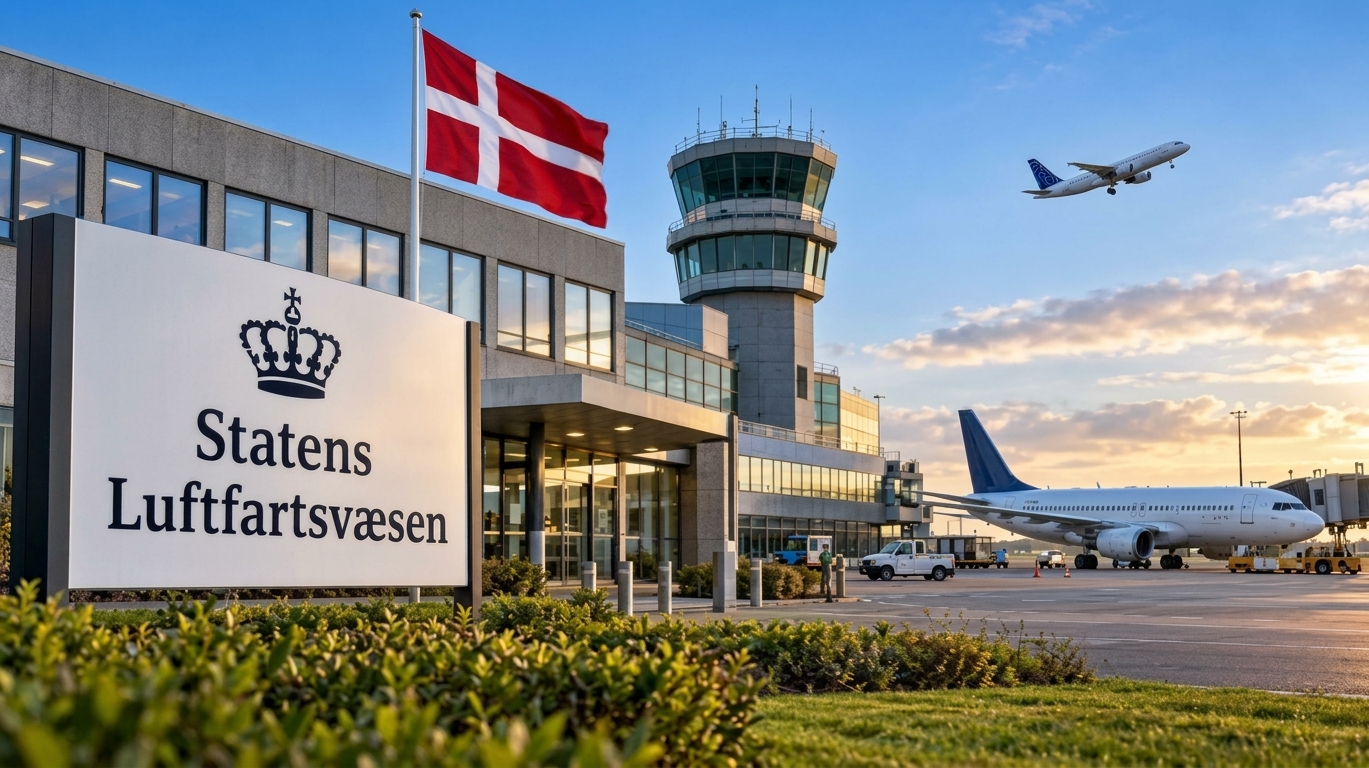
What Was Statens Luftfartsvæsen? Roles and History
Statens luftfartsvæsen commonly abbreviated as SLV, was Denmark’s former government authority responsible for regulating and supervising civil aviation. Its work covered aviation safety, technical requirements, operational rules, and oversight of organizations involved in flying.
Historical Danish government records describe SLV as an authority under the Ministry of Transport. Its duties included supporting the minister and other public authorities on aviation matters, regulating civil aviation, and supervising compliance with aviation requirements.
The authority was more than an administrative office. It helped establish the conditions under which aircraft, pilots, airports, and aviation businesses could operate within Denmark’s legal framework.
Its responsibilities are documented in the Danish government’s historical regulation, Bekendtgørelse nr. 110 af 3. februar 2009, which outlines the authority’s tasks and powers.
2. What Does Statens Luftfartsvæsen Mean in English?
The name is Danish and refers to the state’s aviation administration or civil aviation authority.
The words can be understood in three parts:
- Statens: Of the state or government.
- Luftfart: Aviation or air transport.
- Væsen: An administrative body, institution, or public service organization, depending on context.
Together, the name describes a government body responsible for aviation matters.
English-language references may use terms such as Danish Civil Aviation Authority when discussing the historical organization. However, readers should distinguish historical names from the official English name of Denmark’s current authority, the Danish Civil Aviation and Railway Authority, known in Danish as Trafikstyrelsen.
This distinction is useful when researching old regulations, archived government documents, aviation certificates, or historical references to Danish air transport.
3. Why Was Statens Luftfartsvæsen Important?
Civil aviation requires clear rules because aircraft operations involve technical, operational, and human risks. A functioning regulatory system helps ensure that operators meet safety requirements before and during their activities.
Statens Luftfartsvæsen helped provide that structure in Denmark. Its work connected national aviation legislation with the practical requirements faced by pilots, airlines, maintenance organizations, and airports.
Its importance can be understood through several key objectives:
- Safety: Establishing and supervising aviation requirements.
- Compliance: Checking whether regulated organizations followed applicable rules.
- Authorization: Handling approvals and permissions within its legal remit.
- Consistency: Applying aviation standards across different parts of the industry.
- Public confidence: Supporting a system in which aviation activities operate under defined rules.
These responsibilities helped create an organized foundation for civil aviation rather than leaving safety decisions entirely to individual operators.
4. Main Responsibilities of Statens Luftfartsvæsen
The authority’s work covered multiple parts of the aviation sector. Its exact powers depended on the legislation and regulations in force at the relevant time.
The following table summarizes major areas associated with its historical responsibilities.
| Responsibility | What it involved | Why it mattered |
|---|---|---|
| Aviation regulation | Developing or issuing rules within delegated authority | Set common operating requirements |
| Safety supervision | Checking compliance with aviation standards | Helped identify risks and shortcomings |
| Aircraft oversight | Applying requirements related to aircraft and airworthiness | Supported safe aircraft operation |
| Personnel certification | Administering relevant pilot and aviation personnel requirements | Helped ensure appropriate qualifications |
| Airport oversight | Supervising regulated airport and aerodrome activities | Supported safe ground and flight operations |
| Business approvals | Reviewing regulated aviation organizations and activities | Established accountability |
| Legal administration | Applying aviation legislation and delegated powers | Connected government policy with enforcement |
| Public information | Publishing or communicating requirements and guidance | Helped aviation stakeholders understand their obligations |
The authority did not replace the responsibilities of airlines, pilots, mechanics, or airport operators. Instead, it established and supervised regulatory requirements within its remit.
5. Aviation Safety and Regulatory Oversight
Aviation safety depends on more than the condition of an aircraft. It also relies on trained personnel, suitable procedures, maintenance systems, operational planning, and effective oversight.
Statens Luftfartsvæsen contributed to this wider safety system by supervising civil aviation activities and applying relevant rules.
Regulatory oversight can involve reviewing records, checking whether an organization meets approval conditions, assessing technical documentation, and carrying out inspections. The precise methods and powers available depend on the legislation in force.
For example, a regulated operator may need to demonstrate that its aircraft are maintained according to applicable standards and that personnel hold the required qualifications. Oversight helps verify compliance rather than relying solely on an operator’s claims.
This approach supports a broader principle: aviation businesses remain responsible for operating safely, while the regulator establishes requirements and checks compliance.
6. Aircraft, Pilots, and Aviation Personnel
Aircraft and aviation personnel must meet applicable technical and professional requirements before carrying out regulated activities.
Historically, the responsibilities associated with Statens Luftfartsvæsen included aviation rules affecting aircraft, maintenance, training, and certification. These areas are essential because an aircraft can only be operated safely when its technical condition and the competence of its crew meet the relevant standards.
Depending on the activity and the rules in force, oversight may involve:
- Aircraft registration and documentation.
- Airworthiness and maintenance requirements.
- Pilot licences and qualifications.
- Training and examination standards.
- Approval of maintenance or training organizations.
- Operational permissions and restrictions.
These requirements help establish a documented basis for safe aviation operations.
Readers researching a historical licence or aircraft record should check the date of the document. Regulations, issuing authorities, and administrative procedures may have changed since the record was created.
7. Airports and Aviation Infrastructure
Airports form a critical part of the aviation safety system. Their infrastructure, operating procedures, and emergency arrangements must support the aircraft and services using them.
Statens Luftfartsvæsen’s historical responsibilities included oversight of regulated airport and aerodrome activities. The authority also had a specific operational connection to Bornholm Airport, which historical legislation identifies as a state airport operated by SLV.
Airport-related regulatory matters can include approval conditions, operating standards, safety procedures, and the suitability of facilities for intended operations. The exact requirements depend on the airport, its activities, and applicable law.
It is also important to distinguish airport regulation from air traffic services. A regulator sets or supervises requirements within its legal authority; air navigation service providers carry out operational services such as managing air traffic. These functions are related, but they are not interchangeable.
8. Danish Aviation Laws and Regulations
Aviation authorities do not operate independently of the law. Their powers come from legislation, ministerial delegation, and other applicable legal instruments.
For Denmark, the Danish Air Navigation Act, known in Danish as luftfartsloven, provides the legal framework for civil aviation. Historical regulations show how Statens Luftfartsvæsen exercised powers delegated by the Ministry of Transport.
One example is Executive Order No. 110 of 3 February 2009, which described the authority’s responsibilities, powers, publication of aviation rules, and access to appeals.
When researching the legal history of Danish aviation, readers should distinguish three kinds of material:
- Acts: Establish the main legal framework.
- Executive orders: Set out specific rules or delegate powers under legislation.
- Technical regulations and guidance: Explain requirements for particular aviation activities.
A historical regulation should not automatically be treated as current law. Always check its legal status, effective date, amendments, and the authority now responsible for the relevant subject.
9. Statens Luftfartsvæsen and Bornholm Airport
Bornholm Airport is an important part of the history of Statens Luftfartsvæsen because the former authority had an operational role there in addition to its regulatory duties.
The 2009 Danish executive order expressly stated that SLV operated the state airport at Bornholm. This is a useful historical detail because it shows that the authority’s responsibilities were not limited to writing rules and conducting inspections.
A government body may sometimes combine regulatory responsibilities with specific operational or administrative functions. However, the arrangement for one period should not be assumed to remain unchanged indefinitely.
Anyone researching Bornholm Airport should therefore check current official airport and government information for details about its present management, services, and regulatory arrangements.
10. Relationship With European and International Aviation Standards
Aviation crosses national borders. Airlines fly between countries, aircraft may be registered in one jurisdiction and operated in another, and international services depend on compatible technical and safety requirements.
Denmark’s aviation framework is connected to wider European and international standards. These include the work of:
- ICAO — International Civil Aviation Organization: Develops international standards and recommended practices for civil aviation.
- EASA — European Union Aviation Safety Agency: Supports common aviation safety rules and oversight across the European system.
- EU institutions: Establish aviation legislation applicable within the European Union.
- EUROCONTROL: Works on cooperation and coordination related to European air traffic management.
Denmark’s current aviation authority explains that Danish aviation legislation incorporates relevant international and European requirements.
This context matters when studying Statens Luftfartsvæsen because the historical authority worked within a wider regulatory environment. National rules did not exist in isolation; they interacted with international obligations and European aviation developments.
11. What Happened to Statens Luftfartsvæsen?
Statens Luftfartsvæsen is a historical authority name rather than the name of Denmark’s current aviation regulator.
Today, the relevant government organization is Trafikstyrelsen, officially called the Danish Civil Aviation and Railway Authority in English. Its remit includes civil aviation as well as railway-related responsibilities.
The transition matters for anyone searching for old documents or trying to contact the correct agency. A historical document may name SLV as the issuing authority even though present-day applications, guidance, and regulatory information are published by Trafikstyrelsen.
For example, the current authority publishes information on aviation legislation, flight operations, airworthiness, education and certification, aeromedical matters, and other civil aviation topics.
If you need a decision, licence, or regulatory requirement that relates to a historical SLV record, begin with the original document and then consult the current authority’s official guidance.
12. Statens Luftfartsvæsen vs. Trafikstyrelsen
The two names are connected by Denmark’s aviation regulatory history, but they should not be used as if they identify the same organization in every historical context.
| Feature | Statens Luftfartsvæsen (SLV) | Trafikstyrelsen today |
|---|---|---|
| Status | Former aviation authority | Current Danish government authority |
| Historical context | Associated with earlier Danish civil aviation administration | Operates under the current government structure |
| Aviation regulation | Regulated and supervised civil aviation within its former remit | Publishes and administers current aviation rules within its authority |
| Safety oversight | Performed historical oversight functions | Supervises regulated civil aviation activities |
| Official documentation | Found in archived laws, orders, and records | Found on current official government websites |
| Research approach | Check historical dates and legal status | Check current requirements and contact details |
The safest approach is to use SLV when describing the historical organization and Trafikstyrelsen when referring to the current authority, unless a source specifically uses a different name for a particular period or legal purpose.
13. How Denmark’s Aviation Authority Works Today
Trafikstyrelsen’s present-day responsibilities show how the work of an aviation regulator continues in a modern regulatory environment.
Its official civil aviation resources cover a wide range of subjects, including flight operations, airworthiness, aviation medicine, personnel certification, legal requirements, and reporting.
For regulated operators and aviation professionals, these resources can help answer practical questions such as:
- Which rules apply to a particular flight operation?
- What approvals or licences are required?
- Which standards apply to aircraft maintenance?
- Where can official Danish aviation regulations be found?
- How should a person report an aviation occurrence?
- Which authority should be contacted about a specific aviation matter?
The correct answer depends on the activity, the type of aircraft, the relevant jurisdiction, and the rules currently in force. For this reason, official guidance is more reliable than relying on a historical summary alone.
Start with the official Danish Civil Aviation and Railway Authority website for current English-language information.
14. Why Statens Luftfartsvæsen Still Matters Today
Although Statens Luftfartsvæsen is a former authority, its name remains relevant to historical research and the interpretation of older aviation documents.
Its significance can be seen in several areas:
- Legal research: Older Danish aviation rules may identify SLV as the responsible authority.
- Aviation history: The organization helps explain the development of civil aviation administration in Denmark.
- Document verification: Historical licences, approvals, and technical rules may contain its name.
- Regulatory continuity: Comparing old and current sources helps researchers understand how responsibilities and requirements evolved.
- Academic work: Students studying public administration, aviation law, or transport policy can use historical records to trace institutional change.
A key research principle is to verify each document against its publication date and legal status. The name of an authority on an old document does not prove that the same rules or procedures remain in effect.
15. How to Research Statens Luftfartsvæsen Accurately
If you are looking for information about Statens Luftfartsvæsen, follow a clear research process rather than relying on short summaries or copied descriptions.
Recommended steps
- Search the original Danish name. Use “Statens Luftfartsvæsen” and the abbreviation “SLV” to locate historical records.
- Find the original legal document. Official legal databases are preferable to secondary summaries.
- Check the date. Identify when the regulation was issued and whether it was later amended or repealed.
- Identify the subject. Determine whether the document concerns licensing, aircraft, airports, maintenance, or another topic.
- Compare it with current guidance. Use Trafikstyrelsen’s official website for present-day requirements.
- Confirm before acting. If a legal or operational decision depends on the information, contact the relevant authority or a qualified aviation professional.
This method reduces the risk of confusing historical rules with current requirements.
Frequently Asked Questions
1. What was Statens Luftfartsvæsen?
Short answer: Statens Luftfartsvæsen was Denmark’s former civil aviation authority.
It regulated and supervised civil aviation and carried out responsibilities involving aviation rules and safety oversight. Historical Danish government records document its role under the Ministry of Transport.
2. What does Statens Luftfartsvæsen mean in English?
Short answer: It broadly means the state’s aviation administration or civil aviation authority.
The phrase is Danish. Its most useful English rendering depends on the context, especially whether a source refers to the former organization or Denmark’s current authority.
3. Does Statens Luftfartsvæsen still exist?
Short answer: It is a former authority name, not the name of Denmark’s current civil aviation regulator.
Trafikstyrelsen, officially the Danish Civil Aviation and Railway Authority, publishes current aviation legislation and information about its regulatory responsibilities.
4. What were the main duties of Statens Luftfartsvæsen?
Short answer: Its duties included civil aviation regulation, safety supervision, and administration of aviation requirements.
Historical responsibilities also covered areas such as aircraft, aviation personnel, airports, and regulated aviation activities. The exact scope depended on the rules in force at the time.
5. What was its connection to Bornholm Airport?
Short answer: Historical Danish legislation identified Bornholm Airport as a state airport operated by Statens Luftfartsvæsen.
This shows that the former authority had a specific operational role as well as regulatory responsibilities. For current airport information, consult official sources.
6. Where can I find official information about Danish aviation regulations today?
Short answer: Start with Trafikstyrelsen’s official website and Denmark’s official legal information resources.
The current authority publishes aviation regulations and guidance on subjects such as flight operations, airworthiness, certification, and aviation safety. Check the effective date of any rule before relying on it.
Conclusion
Statens Luftfartsvæsen played an important role in Denmark’s civil aviation administration by regulating aviation activities, supervising safety requirements, and carrying out responsibilities assigned under Danish law. Its historical records remain useful for understanding how the country’s aviation system developed.
The most important distinction is between the former authority and the present-day Danish Civil Aviation and Railway Authority, Trafikstyrelsen. If you are researching an old aviation regulation, licence, or airport record, begin with the original document and verify any current requirements through official government sources. This approach provides a clearer, more accurate understanding of Danish aviation history and regulation.