Carlos Scola Pliego: Film Career, Sade Adu & Life
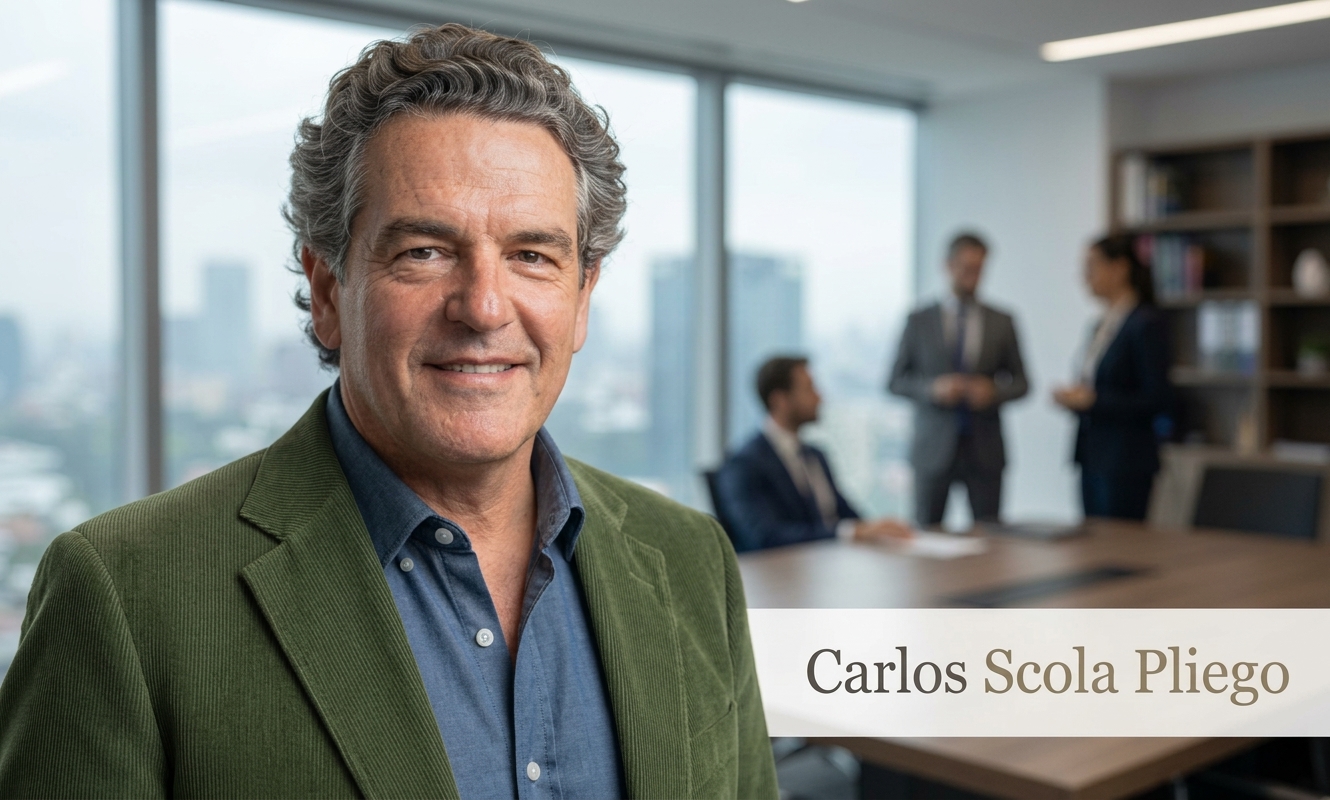
Carlos scola pliego is a Spanish filmmaker whose career developed largely behind the camera. Film records credit him with assistant-director, director, writer, and other production roles, while his name also appears as Carlos Scola in professional databases. His career included work on Spanish productions and international projects such as Never Say Never Again, Eleni, and the Christopher Columbus television miniseries.
He is also known publicly because of his marriage to British-Nigerian singer Sade Adu. Sade’s official biography confirms that she married Spanish film director Carlos Scola Pliego in 1989.
That marriage brought considerably more attention to his name, but it was not the beginning of his professional identity. His filmography shows that he had already built experience in production before becoming associated with one of the most recognizable singers of the 1980s and 1990s.
Carlos Scola Pliego Quick Facts
| Detail | Information |
|---|---|
| Full name | Carlos Scola Pliego |
| Professional name | Carlos Scola |
| Nationality | Spanish |
| Profession | Filmmaker, director, writer, assistant director |
| Known for | Film career and marriage to Sade Adu |
| Former spouse | Sade Adu |
| Marriage year | 1989 |
| Reported divorce year | 1995 |
| Notable production work | Never Say Never Again, Eleni, Christopher Columbus |
| Documentary work | Ngira: Gorilas en la montaña |
| Other directing work | Donde termina el corazón |
| Confirmed date of birth | Not reliably established |
| Confirmed age | Not reliably established |
| Children with Sade | None publicly documented |
| Verified net worth | Not publicly established |
| Current residence | Not reliably confirmed |
The most important research point is that his professional film history is much better documented than his private biography. Reliable records confirm several film credits, but they do not provide a dependable birth date, detailed childhood history, or verified financial profile.
What Is Known About Carlos Scola Pliego’s Early Life?
Very little reliable information exists about Carlos Scola Pliego’s childhood.
Unlike Sade Adu, who has spent decades in the public eye, Carlos worked primarily behind the scenes. Consequently, major interviews and established biographies provide far less information about his parents, siblings, education, childhood, or exact birth date.
His Spanish background is well established. Sade’s official biography identifies him as a Spanish film director, while Spanish coverage has connected him with Madrid during the period surrounding his marriage to Sade.
However, an exact birthplace should not be stated as fact without stronger documentation.
This distinction matters because numerous online biography pages publish precise personal details that cannot be traced to a dependable primary source. A trustworthy profile should identify those gaps rather than turn repeated claims into supposed facts.
How Did Carlos Scola Pliego Build His Film Career?
Carlos built his professional reputation through practical filmmaking roles.
His filmography shows a progression from production and continuity work into assistant directing and eventually directing and writing. IMDb lists him in several assistant-director positions beginning in the early 1980s, including Dos y dos, cinco, Black Commando, Hundra, G’olé!, and Scarab.
This type of career is different from the traditional Hollywood path of becoming famous as an actor or headline director.
Assistant directors work closely with the production team and help turn a director’s plans into an organized shooting process. Their responsibilities can include scheduling, coordination, location logistics, communication between departments, and keeping production moving efficiently.
Carlos’s later directing credits suggest that this practical experience became a foundation for his own creative work.
What Films Did Carlos Scola Pliego Work On?
Carlos Scola Pliego’s filmography includes a mixture of Spanish productions and international projects.
His documented credits include:
- Dos y dos, cinco — second assistant director
- Black Commando — second assistant director
- Hundra — second assistant director
- G’olé! — assistant director
- Scarab — third assistant director
- Never Say Never Again — second assistant director for Spain
- Curse of the Pink Panther — second assistant director for Spain
- Eleni — assistant director for Spain
- Christopher Columbus — assistant director for Spain
- Ngira: Gorilas en la montaña — director/co-director and writer
- Donde termina el corazón — director and writer
The exact role varies from production to production, so these credits should not be presented as though Carlos had the same responsibility on every project.
Some of his early international credits were also uncredited. That means his production involvement appears in available film records even though his name did not necessarily appear in the final on-screen credits.
Did Carlos Scola Pliego Work on Never Say Never Again?
Answer: Yes. Carlos Scola is listed as second assistant director for Spain on Never Say Never Again, the 1983 James Bond-related film starring Sean Connery. Metacritic’s production credits list him in that position, while other film records provide the same Spanish-unit connection.
This is an interesting entry in his career because the movie was an international production with a major cast.
However, the credit needs to be described accurately. Carlos was part of the production team; he was not the film’s director. Irvin Kershner directed the movie, while Carlos worked within the assistant-directing department connected with the Spanish production.
The credit demonstrates the international nature of his early career and places him on a significant production before his marriage to Sade Adu.
What Was His Role in Christopher Columbus?
Carlos also worked on the 1985 television miniseries Christopher Columbus.
IMDb’s detailed production record identifies Carlos Scola as assistant director for Spain and specifically gives the full credit as Carlos Scola Pliego. The credit appears across the miniseries episodes listed in the database.
This is useful because it connects the shorter professional name, Carlos Scola, with the full name Carlos Scola Pliego.
His work on the miniseries also reinforces a pattern in his career: he frequently contributed to productions from behind the camera rather than seeking recognition as an on-screen personality.
When Did Carlos Scola Pliego Become a Director?
Carlos eventually moved beyond assistant-director assignments and began directing projects himself.
His two most clearly documented directing projects are ** Ngira: Gorilas en la montaña ** from 1988 and ** Donde termina el corazón ** from 1989. Film records credit him with directing and writing responsibilities on both projects.
This transition is significant because it shows that his career was not limited to supporting other filmmakers.
He moved from practical production responsibilities into projects where he had greater creative control over the story, writing, and visual direction.
What Is Ngira: Gorilas en la montaña?
Ngira: Gorilas en la montaña is a 1988 documentary short associated with Carlos Scola.
IMDb credits Carlos Scola as director and writer, while the detailed crew record also identifies him as a producer. The project is listed as a Spanish short documentary with a running time of approximately 25 minutes and filming locations in the Democratic Republic of the Congo.
The project stands out because it demonstrates an interest in documentary filmmaking and international subjects.
Instead of relying on fictional storytelling, documentary work requires filmmakers to respond to real locations, people, environments, and events. Working in such settings also demands preparation because many elements cannot be controlled in the same way as a conventional studio production.
What Is Donde termina el corazón?
Donde termina el corazón is another important directing credit in Carlos Scola’s filmography.
Released in 1989, the documentary is listed by IMDb as directed and written by Carlos Scola. The film presents a view of Africa ranging from the Ituri Forest to areas around Nairobi, according to its available description.
The project also demonstrates how Carlos’s career expanded from assisting on large productions to creating documentaries under his own creative direction.
The film’s cinematography was handled by Javier Aguirresarobe, who later became a highly regarded Spanish cinematographer.
Who Is Sade Adu?
Sade Adu is the British-Nigerian singer best known as the lead vocalist of the band Sade.
Her career reached international success during the 1980s with albums such as Diamond Life, Promise, and Stronger Than Pride. Her public profile was vastly larger than Carlos’s, which explains why their marriage became the most widely discussed part of his biography.
Sade has also maintained a notably private approach to her personal life. Her official biography specifically discusses her reluctance toward intrusive media attention and confirms her marriage to Spanish film director Carlos Scola Pliego in 1989.
That privacy means many detailed stories about their relationship are difficult to verify.
When Did Carlos Scola Pliego Marry Sade Adu?
Answer: Carlos Scola Pliego and Sade Adu married in 1989.
Sade’s official biography confirms the marriage and identifies Carlos as a Spanish film director. Professional biographical records list the marriage as beginning in 1989 and ending in 1995.
Some online sources provide different exact wedding dates, so the safest documented answer is the year rather than presenting a disputed day as certain.
Their marriage placed Carlos in the public story surrounding one of the most successful singers of the era, but it did not erase his own career in film.
How Long Were Carlos Scola Pliego and Sade Adu Married?
Available professional records place the marriage from 1989 to 1995, meaning the relationship lasted roughly six years.
Spanish media also reports that Sade spent part of this period living in Madrid and that the relationship ended before she returned to London.
The public record contains much less information about their everyday married life.
This is consistent with Sade’s long-standing preference for keeping personal matters away from extensive media coverage. As a result, it is difficult to construct a detailed account of their private relationship without relying on sources that may not be independently verified.
Why Did Carlos Scola Pliego and Sade Adu Divorce?
The marriage ended in 1995, but the precise reason for the divorce is not firmly established in the strongest public sources reviewed for this article.
Several websites claim to explain the breakup, but many provide no original interview, court document, or contemporary evidence to support their accounts.
The responsible approach is therefore straightforward:
- The couple married in 1989.
- They later separated.
- Their divorce was recorded in 1995.
- The specific private reason for the divorce is not reliably documented.
Avoiding invented explanations is especially important when writing about people whose private lives have received limited first-hand coverage.
Did Carlos Scola Pliego and Sade Adu Have Children?
There are no publicly documented children from the marriage between Carlos Scola Pliego and Sade Adu.
Sade later became a parent to Izaak Theo Adu in 1996, after her marriage to Carlos had ended. Contemporary and later profiles identify Izaak as Sade’s child from her relationship with music producer Bob Morgan.
This distinction prevents a common biography error: connecting Sade’s later child to her earlier marriage with Carlos.
The available evidence supports the conclusion that Carlos and Sade did not have children together.
What Happened to Carlos After the Divorce?
Carlos became considerably less visible in mainstream celebrity coverage after the marriage ended.
His professional film record, however, continued to contain later credits. IMDb identifies him as part of the additional crew on Goal II: Living the Dream in 2007, showing that his connection with film production extended beyond the documentary work of the late 1980s.
The later record is much thinner than his early filmography.
There are no strong recent sources that provide a detailed account of his daily life, career activities, residence, or personal relationships.
That lack of information should not be mistaken for evidence that he stopped working at a particular time. It simply means the public record becomes less detailed.
Where Is Carlos Scola Pliego Today?
Answer: Carlos Scola Pliego’s current residence and personal circumstances are not reliably established by strong public sources.
He has maintained a low public profile, and there is no dependable recent biography that provides a verified location or detailed account of his present activities.
Some websites claim to know where he lives or what he currently does, but those statements generally lack sufficient supporting evidence.
The most accurate description is that Carlos remains a private figure with a documented historical career in film.
What Is Carlos Scola Pliego’s Age?
Carlos Scola Pliego’s exact date of birth has not been reliably confirmed in the strongest sources reviewed for this article.
Consequently, his precise age should not be presented as an established fact.
His film credits demonstrate that he was professionally active by the early 1980s, but that timeline alone cannot establish his year of birth.
This is an important SEO and trust point: when a person’s birthday is not reliably documented, a useful article should say so rather than copy an unsupported number from another website.
What Is Carlos Scola Pliego’s Net Worth?
There is no verified public figure for Carlos Scola Pliego’s net worth.
His film credits demonstrate professional work, but they do not reveal his total earnings, investments, property ownership, savings, or other assets.
Online celebrity sites sometimes publish precise financial estimates for relatively private figures. Without financial records or a credible first-hand disclosure, those numbers should not be treated as established facts.
Therefore, the most accurate answer is that Carlos Scola Pliego’s net worth is not publicly documented.
Carlos Scola Pliego: Confirmed Facts vs. Online Claims
| Topic | Best-supported information |
|---|---|
| Full name | Carlos Scola Pliego |
| Professional name | Carlos Scola |
| Nationality | Spanish |
| Career | Filmmaker and production professional |
| Assistant-director work | Documented across several productions |
| Never Say Never Again | Second assistant director for Spain |
| Christopher Columbus | Assistant director for Spain |
| Ngira | Director/writer; production records also credit him as producer |
| Donde termina el corazón | Director and writer |
| Sade Adu marriage | Confirmed in 1989 |
| Divorce | Professional records list 1995 |
| Children with Sade | None publicly documented |
| Exact birthday | Not reliably confirmed |
| Exact age | Not reliably confirmed |
| Current residence | Not reliably confirmed |
| Current occupation | Not reliably confirmed |
| Net worth | Not reliably confirmed |
This distinction is useful for readers because search results often combine verified film credits with unsupported personal information.
Why His Film Career Deserves Attention
It is easy to describe Carlos Scola Pliego simply as Sade Adu’s former husband, but that leaves out the clearest part of his professional record.
His filmography shows a progression through several production roles. He worked on Spanish projects, contributed to international films, served as an assistant director on the Spanish unit of Never Say Never Again, worked on Christopher Columbus, and later directed documentary projects himself.
His documentary work is especially useful for understanding his creative identity.
Ngira: Gorilas en la montaña and Donde termina el corazón demonstrate that he was not only helping other directors execute productions. He also took responsibility for writing and directing his own projects.
That professional record gives his biography depth beyond his connection to a famous singer.
Frequently Asked Questions
Who is Carlos Scola Pliego?
Answer: Carlos Scola Pliego is a Spanish filmmaker who worked as an assistant director, director, writer, and production professional. He is also known publicly because he married singer Sade Adu in 1989.
What movies did Carlos Scola Pliego work on?
Answer: His documented production credits include Never Say Never Again, Hundra, Curse of the Pink Panther, Eleni, and the Christopher Columbus miniseries. His role varied by production.
Did Carlos Scola Pliego direct any films?
Answer: Yes. Carlos Scola directed and wrote Donde termina el corazón in 1989 and worked as director/writer on the 1988 documentary short Ngira: Gorilas en la montaña.
When did Carlos Scola Pliego marry Sade Adu?
Answer: Carlos Scola Pliego and Sade Adu married in 1989. Sade’s official biography confirms the marriage, while professional film records place their marriage between 1989 and 1995.
When did Carlos Scola Pliego and Sade Adu divorce?
Answer: Their divorce is generally recorded as occurring in 1995. The precise private reason for the divorce has not been reliably established in the strongest sources available.
What is Carlos Scola Pliego’s net worth?
Answer: There is no dependable public figure for Carlos Scola Pliego’s net worth. Online estimates are not sufficient evidence to establish his actual financial position.
Final Takeaway
Carlos Scola Pliego built a genuine career in film long before his name became associated with Sade Adu. His professional record includes assistant-director work on international productions such as Never Say Never Again and Christopher Columbus, followed by directing and writing credits on documentary projects including Ngira: Gorilas en la montaña and Donde termina el corazón.
His 1989 marriage to Sade Adu became the part of his biography most familiar to the general public. The marriage later ended in divorce, commonly recorded as 1995, while the couple did not have publicly documented children together.
Much of Carlos’s personal life remains outside the public record. His exact age, current residence, net worth, family background, and present-day activities should therefore not be stated as fact without stronger evidence.
For anyone researching Carlos Scola Pliego, the strongest picture comes from combining his documented film credits with reliable information about his marriage to Sade Adu. That approach creates a more complete biography while respecting the limits of what can actually be verified.