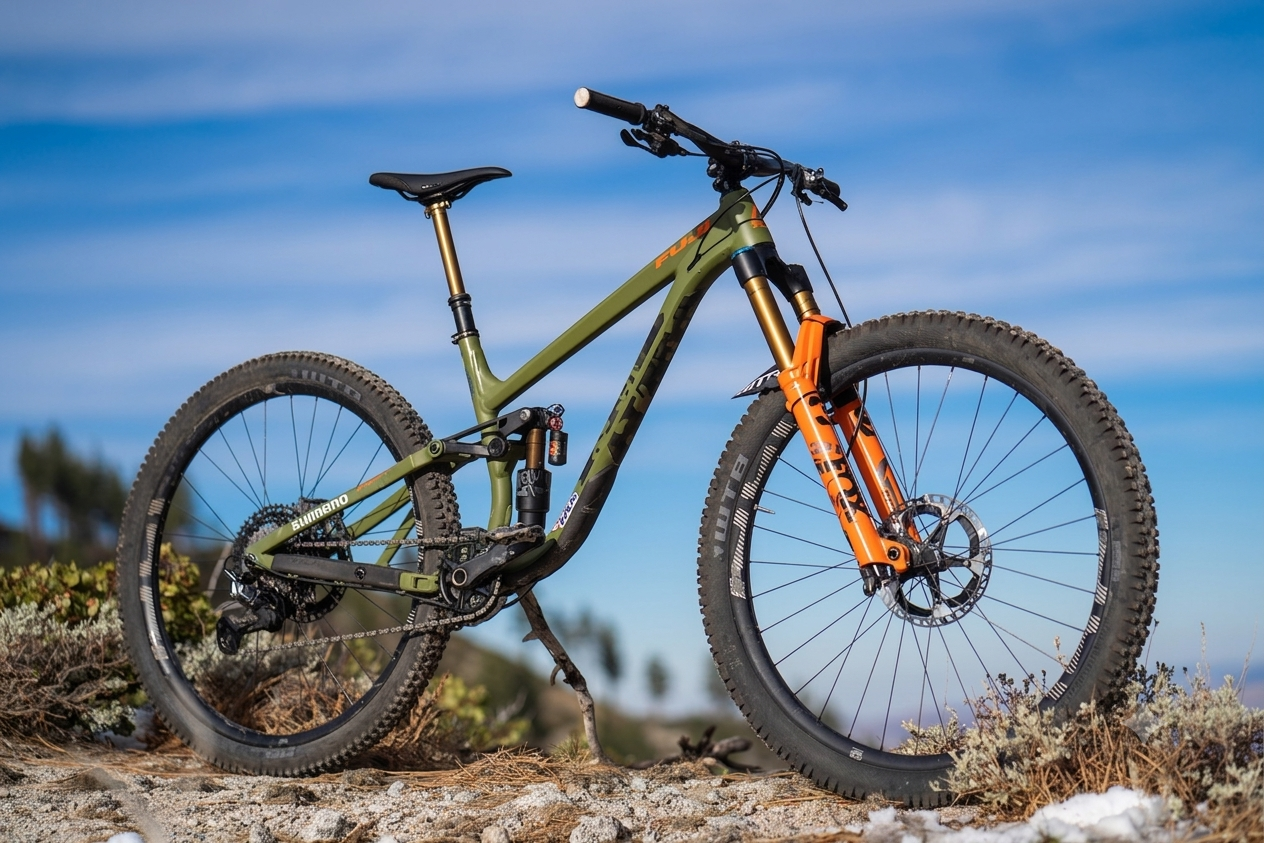
Fuji Rakan 29 LT 1.1: Is This Enduro Bike Worth It.
Fuji Rakan 29 LT 1.1: Does This Enduro Bike Earn Its Price Tag?
Picking the wrong enduro bike wastes thousands of dollars and leaves you nervous on every steep descent. Too many riders buy on hype instead of geometry, travel, and real trail feedback. The Fuji Rakan 29 LT 1.1 tackles that problem directly with 150mm of rear travel, a burly aluminum frame, a sits at the top of Fuji’snd a build kit made for hard descents, and this guide breaks down exactly what you get.
What Is the Fuji Rakan 29 LT 1.1?
The Fuji Rakan 29 LT 1.1 Rakan lineup, built specifically for enduro and all-mountain riding. It pairs a 160mm-travel RockShox ZEB fork with 150mm of rear travel, making it the longest-travel 29-inch bike Fuji currently builds.
Fuji’s engineers designed this bike around descending confidence first. The A6-SL super-butted aluminum frame keeps weight reasonable while standing up to repeated hard landings, and the MLink suspension system smooths out rough trail sections without sacrificing pedaling efficiency on the climbs back up.
Riders who want one bike that handles bike-park laps on Saturday and a long backcountry loop on Sunday tend to land on this exact model.
Fuji Rakan 29 LT 1.1 Full Specification Table
Here is every core spec in one place, gathered from Fuji’s own product documentation, so you can compare it against other enduro bikes at a glance.
| Component | Specification |
|---|---|
| Wheel size | 29″ |
| Frame material | A6-SL super-butted aluminum |
| Fork | RockShox ZEB Select+, DebonAir, 160mm travel |
| Rear shock | RockShox Super Deluxe Coil Select+ |
| Rear travel | 150mm |
| Suspension design | Fuji MLink four-bar linkage |
| Drivetrain | SRAM GX Eagle 1×12 |
| Brakes | TRP Trail EVO, 203mm front / 180mm rear rotors |
| Front tire | Maxxis Assegai, 29″x2.5″, 3C MaxxTerra, EXO+ |
| Rear tire | Maxxis Minion DHR II, 29″x2.4″, 3C MaxxTerra, EXO+ |
| Dropper post | Crankbrothers Highline 3 |
| Handlebar | Race Face Aeffect R, 780mm width, 20mm rise |
| Rear axle spacing | Boost 148x12mm |
| Headset | FSA, tapered, sealed cartridge bearings |
| Sizes available | S (15″), M (17″), L (19″), XL (21″) |
Every part on this list points toward one purpose: confident, controlled descending on rough, technical terrain.
Fuji Rakan 29 LT 1.1 Geometry Explained
Geometry determines how a bike actually feels on the trail, more than any single spec. The Fuji Rakan 29 LT 1.1 uses a slack head tube angle around 63.7 degrees, which keeps the front wheel planted and stable at speed on steep terrain.
Reach numbers run longer than older enduro bikes, giving taller riders room to move their weight back and forth without feeling cramped. This longer, slacker approach trades a bit of tight-trail agility for stability once the trail points downhill and speeds pick up.
Climbers notice the tradeoff too. The Rakan LT pedals well enough for long approach climbs, but its descending-focused geometry means it won’t feel as snappy as a shorter-travel trail bike on flat, twisty singletrack.
Suspension Performance: How the MLink System Works
Fuji’s MLink suspension design sets the Rakan apart from many competitors in this price range. Instead of placing the pivot near the rear axle like most four-bar designs, MLink positions it in the middle of the chainstay.
That placement reduces chainstay flex and lowers stress on the pivot bearings over time, which means less maintenance and a suspension feel that stays consistent as the bike ages. Small-bump sensitivity stays smooth even on chattery rock gardens, while the 150mm of travel still ramps up enough to handle bigger hits without bottoming out harshly.
Riders coming from single-pivot or basic four-bar bikes often notice the difference immediately on rough, high-speed trail sections.
Is the Fuji Rakan a Good Bike?
Yes, the Fuji Rakan earns strong reviews for its component spec and descending capability relative to its price. Long-term test riders consistently note that it handles steep, technical descents with more confidence than its 150mm rear travel number would suggest on paper.
The tradeoff shows up in weight. This is not a lightweight climber, and riders shuttling laps at a bike park will appreciate that far more than riders doing long pedal-heavy backcountry days. For anyone whose riding leans toward descending, bike parks, and enduro-style trails, the Rakan delivers real value against pricier competitors with similar builds.
Where it falls short is cross-country efficiency, so riders chasing lightweight climbing performance should look elsewhere in Fuji’s lineup.
Fuji Rakan 29 LT 1.1 vs Other Rakan Models
Fuji builds several versions of the Rakan platform, and picking the right one depends on your budget and riding style. The table below compares the core differences.
| Model | Fork Travel | Rear Travel | Drivetrain | Best For |
|---|---|---|---|---|
| Rakan 29 (Trail) | 130mm | 120mm | SRAM SX/NX Eagle | All-around trail riding |
| Rakan 29 LT 1.5 | 160mm | 150mm | 11-speed | Budget-focused enduro |
| Rakan 29 LT 1.1 | 160-170mm | 150mm | SRAM GX Eagle 12-speed | Enduro, bike park, aggressive descents |
The 1.1 build sits above the 1.5 in component quality, with a lighter drivetrain and better suspension tuning for the same frame and travel numbers.
Is a 29 Inch Bike Too Big?
Not for most adult riders, and the Fuji Rakan 29 LT 1.1 is a good example why. Larger 29-inch wheels roll over roots, rocks, and rough trail sections more easily than smaller wheel sizes, which actually makes the bike feel more stable and less twitchy at speed, not bigger or harder to handle.
Shorter riders sometimes worry about standover height and maneuverability with 29-inch wheels on tight, technical trails. Fuji addresses this by offering the Rakan LT in a Small (15″) frame size, which keeps standover height reasonable while still delivering the rollover benefits of the larger wheel.
The real fit question comes down to frame size and reach numbers, not wheel diameter alone, so riders should check Fuji’s geometry chart against their height before assuming a 29er won’t work for them.
Are Fuji Mountain Bikes Any Good?
Yes, Fuji has built mountain bikes since the late 1800s and holds a solid reputation for component-heavy builds at competitive prices. The brand tends to spec higher-tier suspension, brakes, and drivetrain parts than competitors charging similar prices, which is exactly what shows up on the Rakan LT 1.1.
Fuji bikes don’t always carry the same brand recognition as some direct-to-consumer or boutique companies, and that shows up in resale value. What you get in exchange is a bike shop-backed warranty, wide dealer availability for service, and a spec sheet that consistently outperforms its price point.
Riders who prioritize component value over brand prestige tend to walk away from Fuji ownership satisfied.
How Much Does a Fuji SL 1.1 Frame Weigh?
The Fuji SL 1.1 is a separate model from the Rakan, built as a lightweight carbon road racing frame rather than a mountain bike. Fuji lists the SL 1.1 frame weight at roughly 695 grams for a size 54cm, making it one of the lightest production road frames on the market.
This weight comes from high-compaction carbon molding and a reduction in bonded frame joints, which also improves overall frame stiffness. Riders shopping for climbing-focused road bikes often compare the SL 1.1 directly against frames from Cannondale, Trek, and Specialized in the same weight class.
Worth noting: this frame has nothing to do with the Rakan’s aluminum enduro frame, so don’t confuse the two when researching Fuji’s lineup.
Sizing Guide for the Fuji Rakan 29 LT 1.1
Getting the right frame size matters more on an enduro bike than almost any other mountain bike category, since fit directly affects control at speed. Use this general guide alongside Fuji’s official geometry chart before buying.
- Small (15″): Riders roughly 5’2″ to 5’6″
- Medium (17″): Riders roughly 5’6″ to 5’9″
- Large (19″): Riders roughly 5’9″ to 6’1″
- XL (21″): Riders roughly 6’1″ and taller
Reach and standover height matter more than saddle height alone on this bike, since aggressive descending requires room to move your body weight around the frame. Test ride two adjacent sizes if you fall between height ranges.
Maintenance Tips to Keep the Rakan LT Riding Well
A bike built for hard descents takes more of a beating than a typical trail bike, so upkeep matters. Following a consistent maintenance routine keeps the Rakan LT performing at its best for years.
- Check suspension air pressure and sag before every few rides, since coil shocks and heavier forks shift more with temperature and use
- Clean and lubricate the MLink pivot bearings every few months, especially after wet or muddy rides
- Inspect brake pads regularly, since the 203mm/180mm rotor setup sees heavy use on steep, technical descents
- Torque check the dropper post collar and stem bolts after the first few rides, as new components tend to settle
- Replace tubeless sealant every three to four months to maintain proper puncture protection on the Maxxis tire setup
Staying ahead of these small checks prevents most of the mechanical issues enduro riders run into mid-season.
Should You Buy the Fuji Rakan 29 LT 1.1?
For riders who prioritize descending confidence, bike park laps, and aggressive trail days over cross-country efficiency, the Fuji Rakan 29 LT 1.1 delivers a component spec and suspension feel that competes well above its price point. The RockShox ZEB fork, coil rear shock, and SRAM GX Eagle drivetrain match what you’d expect on bikes costing significantly more.
The honest tradeoff is weight and climbing snap, since this bike prioritizes going down over going up. If that matches how you actually ride, the Rakan LT 1.1 belongs on your shortlist.
Compare your height against the sizing chart above, then book a test ride at a local Fuji dealer to confirm the geometry fits how you ride before you commit.
Frequently Asked Questions
Is the Fuji Rakan a good bike?
Short answer: Yes, it consistently earns praise for descending capability and component spec relative to its price.
Long-term reviewers note that the Rakan handles steep, technical terrain with more confidence than its travel numbers suggest. The main tradeoff is weight, since this bike prioritizes downhill stability over climbing efficiency, so it suits descending-focused riders more than cross-country racers.
Is a 29 inch bike too big?
Short answer: No, for most adult riders a 29-inch wheel improves stability and rollover without making the bike harder to handle.
The bigger factor in fit is frame size and reach, not wheel diameter. Fuji offers the Rakan LT down to a Small (15″) frame specifically so shorter riders can still benefit from 29-inch wheels without sacrificing standover clearance or maneuverability.
How much does a Fuji SL 1.1 frame weigh?
Short answer: Around 695 grams for a size 54cm frame, making it one of the lightest production road frames available.
The SL 1.1 is a carbon road racing frame, separate from the aluminum Rakan enduro platform. Its low weight comes from high-compaction carbon molding and fewer bonded joints, which also adds frame stiffness for climbing performance.
Are Fuji mountain bikes any good?
Short answer: Yes, Fuji has a long history in mountain bike manufacturing and typically specs higher-tier components than competitors at similar price points.
The brand may not carry the same resale prestige as some boutique labels, but the component value on bikes like the Rakan LT 1.1 consistently outperforms its price bracket. Wide dealer support also makes service and warranty claims easier than with smaller direct-to-consumer brands.
What is the rear travel on the Fuji Rakan 29 LT 1.1?
Short answer: 150mm of rear travel, paired with a 160mm-travel RockShox ZEB fork.
This makes the Rakan LT 1.1 the longest-travel 29-inch bike in Fuji’s current lineup. The combination targets enduro racing, bike park riding, and aggressive all-mountain trails rather than cross-country or light trail use.
What size Fuji Rakan 29 LT 1.1 should I buy?
Short answer: Match your height to Fuji’s size chart: Small fits roughly 5’2″-5’6″, Medium 5’6″-5’9″, Large 5’9″-6’1″, and XL 6’1″ and taller.
Reach and standover height matter more on this bike than on a typical trail bike, since aggressive descending requires freedom of movement over the frame. Riders between sizes should test ride both options before deciding.
About This Guide
This guide was compiled using Fuji’s official product specifications, long-term rider testing data, and established mountain bike publications, cross-checked for accuracy before publication. It reflects specifications current as of 2026.
Sources referenced:
- Fuji Bikes, Official Rakan 29 LT 1.1 Product Page
- Vital MTB, Fuji Rakan 29 LT Long-Term Review
- Vital MTB, Fuji Rakan LT 29 1.1 Specifications Database
- Mountain Bike Action Magazine, Fuji Rakan 29 LT Review
- Cambria Bike, Fuji Rakan 29 LT 1.1 Product Listing
Ready to find your next enduro bike? Compare the sizing chart above against your height, then book a test ride at your local Fuji dealer to feel the geometry for yourself