Donna sicuranza varese 5.4K 24 donna sicura di se caratteristiche 1.6K 8 donna sicura odv 880 n/a donna sicura di se
Donna sicuranza are usually asking one question: how does a woman become someone who feels secure, both inside and out? The phrase, in its more standard Italian form, points to two ideas that go hand in hand: self-confidence, meaning trust in one’s own abilities, and safety, meaning the freedom to live daily life without fear.
These are different levels, but they feed each other. A woman who trusts herself notices warning signs earlier and defends her boundaries better. A woman who lives in a protected environment has more room to study, work, grow and choose freely. This article looks at both dimensions with realistic, practical guidance.
The Self-Assured Woman: Dispelling the Myth
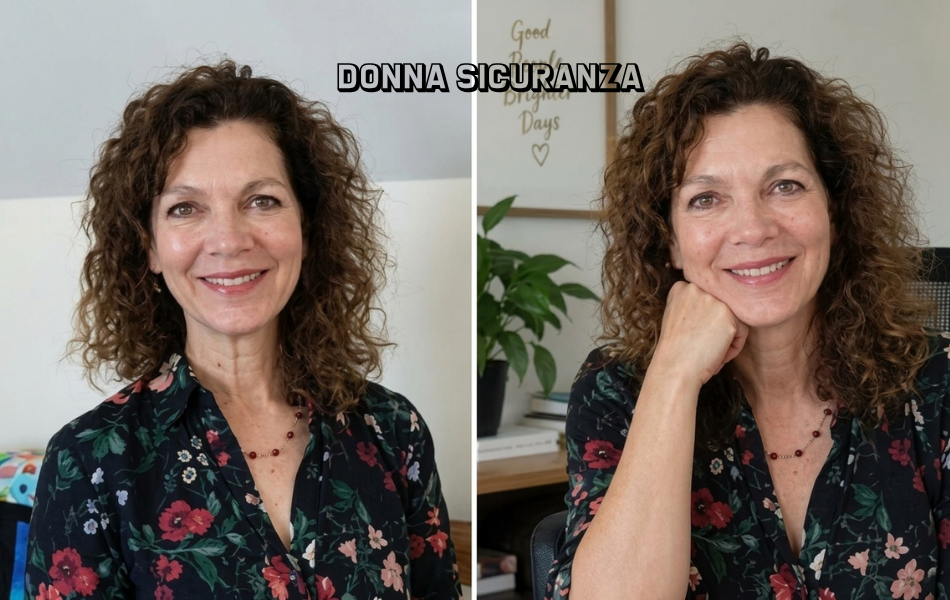
When people talk about a donna sicura di sé (a self-assured woman), they often fall back on two opposite stereotypes: the woman who never shows a doubt, or the one with a dominant personality. Neither describes real confidence.
Genuine confidence is not the absence of fear. It is the ability to act even when doubt is present, knowing you can rely on your own resources. It is not arrogance, noise or perfection. It is inner steadiness, and it shows in the details: how she speaks, how she decides, how she reacts to criticism.
One point is often overlooked: confidence is not a fixed trait you are born with. It is a set of habits and experiences that can be trained at any age.
Donna Sicura di Sé: Key Characteristics
Anyone searching for donna sicura di sé caratteristiche (the traits of a self-assured woman) usually wants to recognize them, and perhaps to recognize them in herself. These are the ones that come up most often.
1. She knows her values. She understands what matters to her and chooses accordingly, without needing constant approval.
2. She communicates assertively. She says what she thinks clearly and respectfully. She is neither aggressive nor passive, and she can state a need or disagreement without over-explaining.
3. She can say no. Refusing is not a fault. She sets limits and keeps them, even when it costs some discomfort.
4. She accepts her mistakes. She treats them as useful information, not as a verdict on her worth, which makes her more flexible and less afraid of failure.
5. She doesn’t compare obsessively. She acknowledges other people’s strengths without feeling diminished. Comparison becomes inspiration rather than competition.
6. She asks for help. Contrary to popular belief, confidence includes leaning on others, on professionals, or on a support network.
7. She pays attention to body language. An open posture, a steady voice and direct eye contact are not tricks. They are the physical expression of an inner disposition.
Where Insecurity Comes From
Understanding why you sometimes feel fragile makes it easier to work on. The most common causes include:
- belittling messages received in childhood or adolescence;
- criticism or control in romantic relationships or workplaces;
- social expectations about the female role, which push women to “be good” rather than “be themselves”;
- periods of change, such as a separation, a bereavement or a move;
- perfectionism, which keeps raising the bar until no result feels like enough.
Recognizing these roots is not about finding someone to blame. It is about no longer treating insecurity as a personal flaw. Often it is a learned response, and what is learned can be changed.
Ten Practical Ways to Become More Confident
Here are some realistic strategies to apply gradually.
- Take stock of your strengths. Write down three things you do well and three challenges you’ve overcome in recent years. Reread them when doubt creeps in.
- Set small goals. A sense of competence grows by accumulation: each goal reached strengthens the next.
- Practice assertiveness. Start with low-stakes situations, like sending back a wrong order or asking for a more realistic deadline.
- Reframe your inner dialogue. Instead of “I can’t do it,” try “I don’t know how yet, but I can learn.”
- Look after your body. Regular sleep donna sicuranza movement and nutrition directly affect mood and your ability to face challenges.
- Limit social media comparison. Online lives are curated and are not a reliable benchmark.
- Surround yourself with supportive relationships. Seek people who value your authenticity, not those who ask you to shrink.
- Learn new skills. A course, a sport, a language: being a beginner and improving is one of the fastest ways to build confidence.
- Learn to accept compliments. A simple “thank you” is enough, with no minimizing.
- Consider professional support. Therapy or coaching can speed up change, especially when insecurity weighs on everyday life.
Personal Safety: Awareness and Prevention
The other side of donna sicuranza is concrete protection. Feeling safe also means having practical tools to move through the world with peace of mind. Some basic principles:
- Trust your instincts. If a situation makes you uncomfortable, you have every right to leave without explaining.
- Share your movements. Letting a trusted person know where you are and when you’ll be home is a simple, effective habit.
- Choose well-lit, busy routes, especially at night.
- Protect your data and accounts. Strong passwords, careful social media privacy settings and caution with personal information reduce online risks.
- Know the useful numbers. In Italy, 1522 is the public-service helpline against violence and stalking, and 112 is the single emergency number.
Being informed and prepared does not mean living in fear. It means feeling freer to move, precisely because you are less unprepared.
The Role of Volunteering: What “ODV” Means
Anyone searching for donna sicura ODV will run into an acronym worth explaining. ODV stands for Organizzazione di Volontariato, a volunteer organization, a legal form recognized under Italy’s Third Sector Code. These are non-profit bodies that run on volunteers’ commitment and focus on assistance, rights protection, prevention and support for people in need.
In the field of safety and support for women, organizations of this kind can offer listening, guidance, information and awareness campaigns. They are an important link between institutions and citizens, because they work close to the ground and understand local needs.
If you want to learn about the services of a specific organization donna sicuranza, check its official channels directly. Contacts, opening hours, services and ways to take part can change over time.
Donna Sicura Varese: The Local Dimension
The search donna sicura Varese shows how much the need for safety and support is, first of all, local. Living in a province means having nearby points of reference: listening desks, family clinics, anti-violence centers, associations, municipal social services and training initiatives.
For those living in the Varese area, a few practical steps can help:
- ask your municipality about social services and active help desks;
- contact your family clinic or GP for initial guidance;
- take part in meetings, courses and workshops on self-esteem, self-defense and prevention when they are offered;
- get to know the local volunteer associations and their activities.
Building a local network is one of the best investments in feeling secure. Knowing who to turn to before you need to changes how you experience hard moments.
Inner Security and Outer Security: Why They Go Together
The two dimensions are not separate donna sicuranza. A woman who works on her self-esteem learns to recognize controlling dynamics, to expect respect and to ask for help sooner. At the same time, living in an environment that guarantees protection, listening and equal opportunity makes it easier to develop self-trust.
That is why the most effective paths combine:
- personal growth (assertiveness, emotional management, boundary-setting);
- practical information (rights, services, prevention tools);
- social support (family, friends, associations, professionals).
Frequently Asked Questions
Can you learn to be a self-assured woman at any age?
Yes. Confidence is built through experience, practice and, when needed, appropriate support. There is no age limit.
Are self-confidence and self-esteem the same thing?
They are related but not identical. Self-esteem is the value we place on ourselves; self-confidence is trust in our ability to handle situations.
How can you recognize a truly confident woman?
By how she behaves in difficult moments: she listens, decides, accepts limits and has nothing to prove to anyone.
Where can I find support if I’m struggling or afraid?
The 1522 helpline is free and available 24 hours a day. In immediate danger, call 112. Family clinics, social services and local associations can also provide listening and guidance.
Conclusion
Being a donna sicura does not mean never having doubts. It means having the tools, inner and outer, to move through them. Recognizing the traits of self-confidence, practicing small daily habits, knowing your local resources and knowing that a volunteer network is ready to help are the four pillars of an aware and free donna sicuranza.
The first step is always the most concrete: choose one of the ten practices above and put it into action today.